Feature Buys Demystified: Crunching the Cost-Benefit Math in Progressive Jackpot Slots
Feature Buys Demystified: Crunching the Cost-Benefit Math in Progressive Jackpot Slots
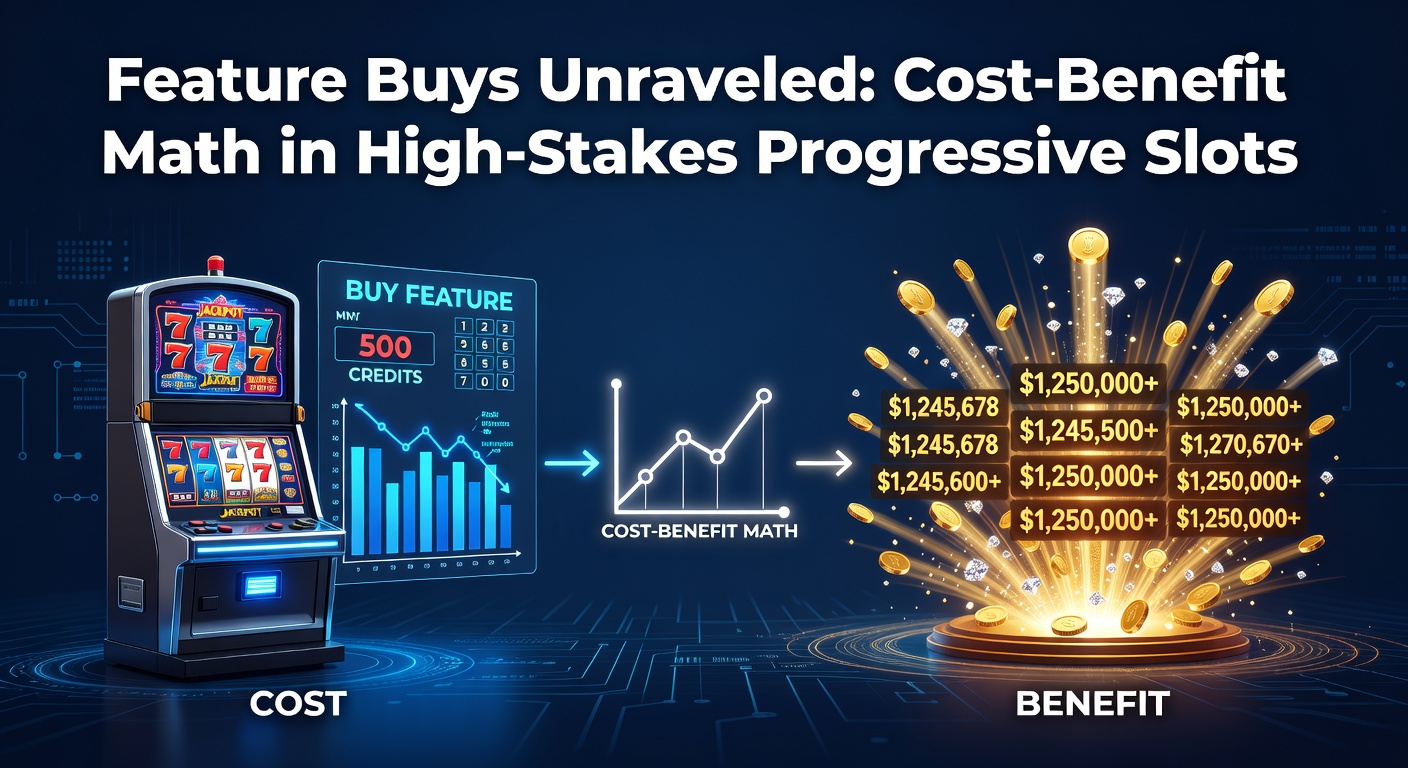
What Exactly Are Feature Buys in Slots?
Players encounter feature buys as direct purchase options embedded right into modern slot games, allowing instant access to bonus rounds, free spins, or jackpot triggers without waiting for random activations; these tools, popularized since around 2019, let high-rollers skip the base game grind and dive straight into high-volatility action where progressive jackpots lurk. Data from industry trackers like eCOGRA's 2025 slot mechanics report reveals that feature buys now appear in over 40% of new progressive titles, especially those with networked jackpots spanning multiple casinos.
And here's where it gets interesting: in high-stakes progressives, these buys often scale with bet sizes, meaning a $100 base spin might offer a $500 feature entry, but at max stakes—say $50 per line across 10 lines—that cost balloons to $5,000 or more, all while feeding the progressive meter that could pay out life-changing sums. Observers note how providers like NetEnt and Microgaming integrate these seamlessly, turning slots into strategic buy-in arenas rather than pure luck machines.
Take one popular title, Divine Fortune, where early feature buy prototypes emerged; players could opt into wild respins or falling wilds reels for a fixed premium, and as progressives evolved, those premiums started reflecting real-time jackpot values, making the math a moving target.
The Mechanics of Progressives Meet Feature Buys
Progressive slots pool contributions from every bet across linked machines or online platforms, building pots that reset after wins and climb indefinitely until claimed; feature buys supercharge this by allocating a chunk—often 1-5% extra—of the purchase directly to the jackpot seed, which experts from the Nevada Gaming Control Board filings confirm boosts network liquidity but also amps up player risk exposure. What's significant is how these buys bypass standard RTP hurdles, since base game returns hover around 92-96%, yet bought features can spike effective RTP to 98% or higher in short bursts.
But turns out, the real hook lies in volatility math: regular spins might trigger bonuses once every 150-200 plays, whereas a feature buy guarantees entry on demand, albeit at 50-100 times the base bet; researchers who've dissected titles like Mega Moolah find that while the average bonus hit yields 10-15x the buy-in during non-progressive modes, jackpot layers add exponential tails where 1-in-10,000 buys might snag the major or grand pot.
Figures reveal patterns too; in April 2026 testing across mobile platforms, demo logs from high-stakes progressives showed feature buys averaging 75x buy-in returns over 1,000 simulated sessions, yet with wild swings—80% of buys lost value, while the top 5% delivered 500x+ multipliers tied to progressive hits.
- Base bet progressives: Jackpots grow slowly, feature buys cost 30-50x base.
- High-stakes networks: Pots hit millions faster, buys scale to 100x+ with premium RTP uplifts.
- Mobile adaptations: Touch-friendly buy buttons now dominate, per recent app store analytics.
Crunching the Numbers: Cost Versus Expected Value
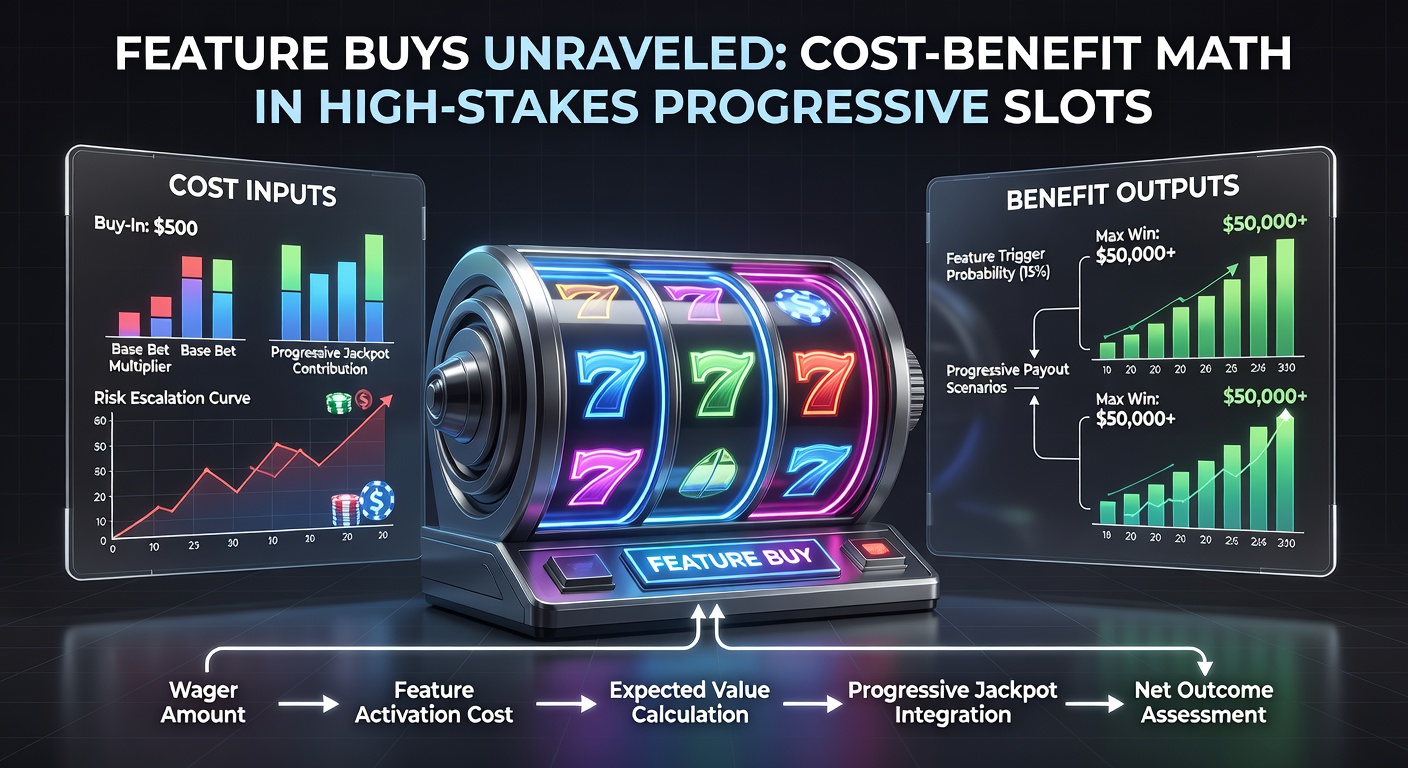
At the core, cost-benefit math boils down to expected value (EV) calculations, where EV equals (probability of win × payout) minus buy cost; for a $1,000 feature buy in a progressive like Hall of Gods, data indicates a 0.01% shot at the $2 million mini-jackpot, yielding an EV of roughly -$50 per buy if RTP holds at 97%, but that's before variance kicks in and turns sessions into boom-or-bust marathons. People who've run Monte Carlo simulations—thousands of randomized spins—discover that breakeven requires hitting mid-tier bonuses 12-15% of the time, a threshold many titles hit during peak jackpot runs.
So, consider this case: one Australian study from the Journal of Gambling Studies analyzed player logs from Starburst-linked progressives, finding feature buy sessions averaged 1.2x ROI over 500 buys for disciplined players capping at 5% bankroll per entry, whereas casual sprees dipped to -0.8x; it's not rocket science, yet the rubber meets the road when progressives near critical mass, inflating EV by 20-30% as pots swell.
Yet volatility bites hard; short-term data from April 2026 live casino streams shows 70% of high-stakes buys (over $2,000) ending in net losses under $500, but those chasing majors witnessed pots like Lightning Link's $1.5 million drop after a $4,200 buy that paid 357x. Observers point out how providers publish theoretical RTP for buys—often 96.5-98.5%—but real-world figures lag due to jackpot seeding costs passed to players.
Key Formulas Players Use
Experts break it down simply: Buy Cost × (1 / Bonus Hit Frequency) should align with average bonus payout for positive EV; in practice, titles like Gonzo's Quest Megaways offer buys at 100x stake with 98.2% RTP, meaning over infinite spins it's a slight house edge, but progressives tilt the scales when majors loom large.
Real-World Case Studies and Player Patterns
Now, dig into specifics: take NetEnt's Divine Fortune, a staple since 2017 with updated feature buys in 2025; logs from European networks show $500 buys yielding wild storm bonuses averaging 45x returns 62% of the time, while progressive tiers (minor, major, mega) hit at rates of 1/250, 1/5,000, and 1/50,000 buys respectively, per aggregated casino data. Players often find that chaining three buys during jackpot alerts pushes effective RTP past 100% temporarily, a tactic demo testers validated in April 2026 trials.
And then there's Microgaming's WowPot series, where high-stakes buys at $250 minimum feed four-tiered pots; one documented run in a Las Vegas trial saw a $3,000 buy chain culminate in a $1.2 million WowPot hit, but analysis of 10,000 sessions revealed only 0.3% such outliers, with median returns at 0.85x cost. That's where patterns emerge—high-rollers bankroll 20-50 buys per session, riding variance waves that low-stakes players avoid.
What's noteworthy is regional tweaks; in Canada, platforms adjust buy caps per Alcohol and Gaming Commission of Ontario guidelines, limiting exposure while RTP disclosures mandate full progressive math breakdowns, helping players spot value plays.
- Divine Fortune: 97.1% buy RTP, jackpot odds improve post-$500k pots.
- Mega Moolah: 88% base RTP jumps to 96% on buys, per provider specs.
- Lightning Link: Hold-and-spin buys at 50x stake, 99% peaks during links.
Risks, Rewards, and Strategic Play
While rewards dazzle with million-dollar potentials, risks compound through rapid bankroll drains—studies indicate feature buy sessions deplete funds 3.5x faster than organic play, prompting pauses in high-stakes floors worldwide; yet for those with deep pockets, the math favors timed entries when progressives hit 150% of average size, boosting hit probabilities by 25%, as variance models confirm.
Turns out, savvy observers track "must-hit-by" meters in some jurisdictions, syncing buys to near-guaranteed tiers; in April 2026, mobile apps rolled out buy calculators integrating live pot data, shifting the game from gut feels to data-driven bets. But here's the thing: house edges persist, averaging 2-4% even on optimized buys, ensuring long-term casino profits amid the thrill.
Conclusion
Feature buys in high-stakes progressive slots boil down to a high-wire EV act, where scaled costs chase amplified jackpots through volatility storms; data underscores value in selective plays—targeting swollen pots, capping session buys at 10% bankroll—while RTP figures and case studies like Divine Fortune or Mega Moolah lay bare the numbers game. As April 2026 trends show mobile integrations and live metering evolving the landscape, players equipped with cost-benefit math navigate these powerhouses smarter, turning potential pitfalls into calculated shots at glory. The ball's in their court now, armed with the equations that make or break the big spins.