How Certification Timelines Influence Feature Deployment in UK-Licensed Gaming Studios
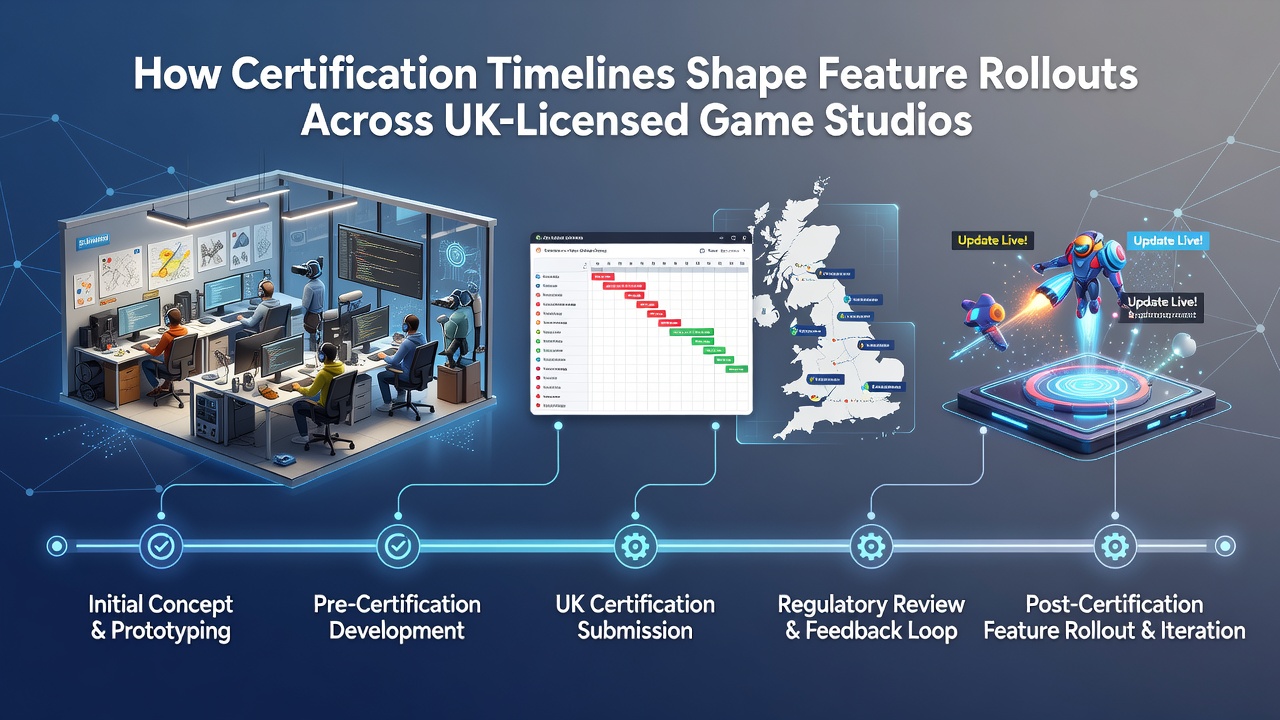
Certification processes create structured pathways that determine when new game features reach UK-licensed studios and their players, and these timelines often stretch across months while incorporating multiple review stages, technical validations, and compliance checks that align with regional regulatory frameworks. Studios must navigate these requirements before deploying elements such as progressive mechanics, bonus systems, or interface updates, which means release schedules frequently depend on external approval cycles rather than internal development milestones alone.
Core Stages in the Certification Sequence
Initial submissions involve detailed documentation of game mathematics, random number generator integrity, and player protection measures, after which independent testing laboratories conduct evaluations that can span several weeks before advancing to regulatory authorities. Data from industry reports shows that laboratories typically require between four and eight weeks for comprehensive assessments, while subsequent authority reviews add another three to six weeks depending on the complexity of the proposed features. Observers note that simpler updates like visual enhancements often clear these hurdles faster than innovations involving real-time data integrations or cross-jurisdictional elements.
Impact on Development Pipelines
Teams at UK-licensed studios adjust their roadmaps around these fixed certification windows, which leads to strategic decisions such as batching multiple features into single submissions to maximize efficiency across approval cycles. Research indicates that this approach reduces redundant testing costs, yet it also concentrates risk because any single rejection can delay an entire bundle of updates until the next available slot opens. Studios operating under multiple licenses coordinate submissions across different regions to avoid overlapping bottlenecks, although synchronization remains challenging when one jurisdiction introduces new guidelines mid-process.
What's interesting is how these timelines interact with seasonal market demands, since features intended for peak periods like summer promotions must begin certification well in advance to meet launch targets. Figures from international gaming oversight bodies reveal that misalignment between certification completion and market windows results in postponed releases for approximately 35 percent of planned updates in mid-sized studios.
Regional Regulatory Variations and Their Effects
UK licensing conditions emphasize player safety and fairness testing that integrate with broader European standards, whereas comparisons with other markets highlight differing priorities. A report from the Nevada Gaming Control Board outlines certification sequences that prioritize hardware compatibility alongside software audits, creating parallel but distinct timelines that multinational studios must reconcile. Meanwhile, Australian regulatory frameworks administered through state-level commissions introduce additional layers of responsible gaming evaluations that extend approval durations for certain bonus features.
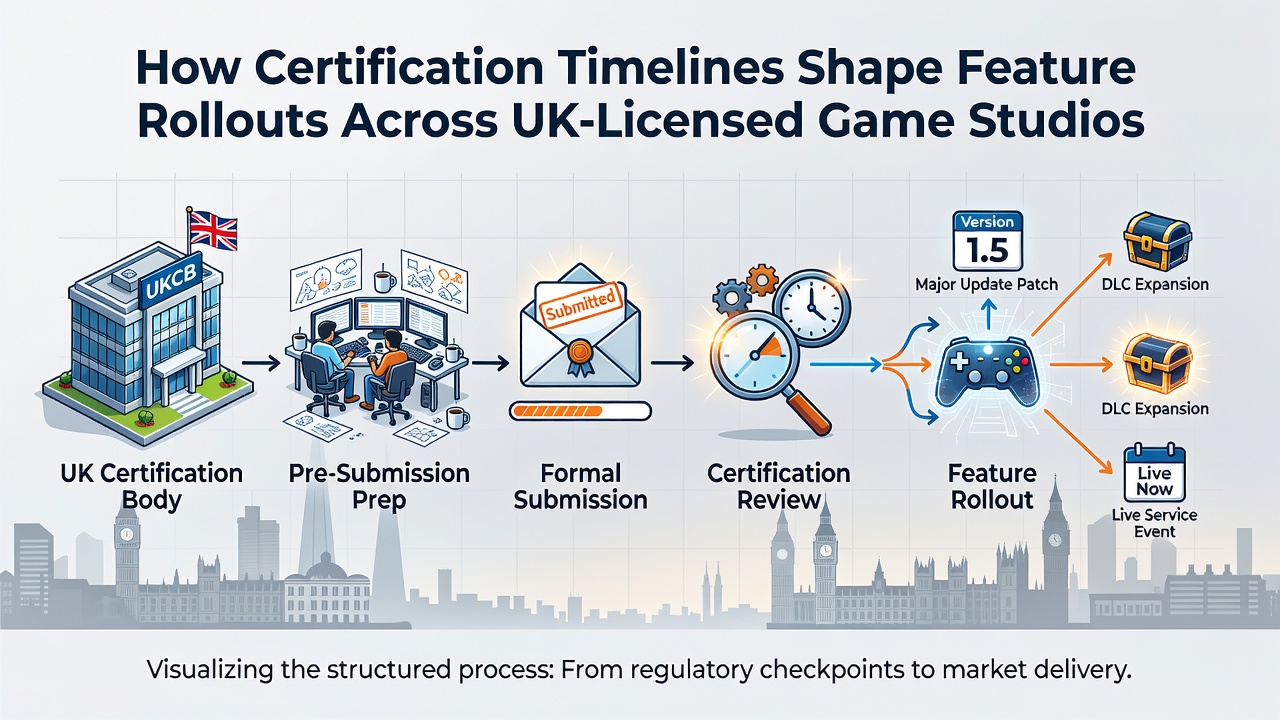
Studios therefore maintain dedicated compliance departments that track evolving requirements across jurisdictions, and those who've studied this landscape know that proactive engagement with testing labs during early development phases can shorten overall timelines by identifying issues before formal submission. Evidence suggests that early-stage consultations reduce revision cycles from an average of three iterations to one in many documented cases.
Case Examples from Mid-2026 Operations
As of June 2026, several UK-licensed studios reported completing certifications for mobile-optimized progressive systems within five months from initial design finalization, a duration that reflects both streamlined lab processes and pre-submission alignment with authority expectations. One documented instance involved a studio that synchronized submissions with updates to international standards, allowing feature rollouts to proceed without additional delays despite incorporating new data encryption protocols.
Another studio navigated extended reviews for features involving live dealer integrations, where testing expanded to cover network latency and multi-player synchronization, ultimately extending the timeline by seven weeks beyond projections. Such experiences demonstrate how specific technical elements directly influence certification length and subsequent deployment pacing.
Strategic Adaptations Across Studios
Many organizations now incorporate certification forecasting into their project management tools, which enables more accurate prediction of rollout dates and helps align marketing campaigns accordingly. Industry associations have compiled datasets showing that studios adopting modular design approaches achieve faster re-certification for iterative updates, since isolated components can undergo targeted reviews without re-evaluating entire games.
Academic analyses from research institutions further support the observation that transparent communication between developers and certifiers correlates with reduced overall timelines, particularly when documentation standards remain consistent across submissions. These patterns hold across various studio sizes, though larger entities often maintain in-house testing capabilities that provide additional buffers against external schedule shifts.
Conclusion
Certification timelines continue to serve as primary determinants of feature rollout pacing for UK-licensed game studios, shaping everything from initial planning through final deployment while interacting with technical, regional, and market variables. Data from diverse oversight sources confirms that studios optimizing their processes around these requirements achieve more predictable release schedules, whereas those treating certification as an afterthought encounter repeated postponements that affect competitive positioning.