Layered Incentives in Mobile Gaming: Techniques Employed by Developers Under Tight Regulatory Controls

Game studios focused on mobile platforms have refined methods for combining multiple reward elements into single play sessions, and these approaches operate within frameworks established by various oversight entities across different jurisdictions. Developers integrate base game features with additional layers such as progressive multipliers, triggered mini-games, and accumulated free spin sequences, all while adhering to standards that emphasize transparency and player protection measures.
Core Elements of Bonus Layering
Bonus layering refers to the systematic stacking of reward mechanics where one feature activates another in sequence, creating extended engagement cycles without violating payout ratio requirements set by regulators. Studios achieve this through algorithms that trigger secondary events based on primary outcomes, for instance a standard win might unlock a multiplier that then feeds into a separate jackpot pool. Research from the International Center for Gaming Regulation at the University of Nevada indicates that such techniques maintain return-to-player percentages within approved ranges while enhancing session depth.
Teams design these layers to function seamlessly on smaller screens, using touch-responsive interfaces that reveal progressive elements gradually. This process relies on data analytics to balance frequency of activations against overall game mathematics, ensuring compliance with rules that limit excessive complexity in user-facing displays.
Mobile-First Development Practices
Companies prioritizing smartphone and tablet environments adapt layering strategies to account for shorter attention spans and variable connectivity conditions common in handheld play. They incorporate adaptive scaling so that bonus sequences adjust dynamically based on device performance, preventing interruptions that could breach fairness protocols enforced by bodies like the New Jersey Division of Gaming Enforcement. Observers note that these creators often test prototypes across multiple operating systems to verify consistent behavior under real-world usage patterns.
What's notable is how mobile constraints influence the depth of each layer, with developers favoring compact animations and quick-resolution mini-features over elaborate desktop-style sequences. Data from industry reports compiled by the European Gaming and Betting Association shows increased adoption of these optimized structures in markets where mobile accounts for the majority of session volume.
Regulatory Frameworks Shaping Implementation
Strict oversight requires documentation of every bonus interaction to allow audits that confirm no manipulation of random number generators occurs during layered activations. Regulators in regions such as Australia and parts of Canada mandate clear disclosure of how layers combine to affect potential outcomes, pushing studios to include in-game explanations accessible via simple menu taps. Compliance teams review code submissions to verify that combined features do not exceed thresholds for maximum win multipliers established in licensing agreements.
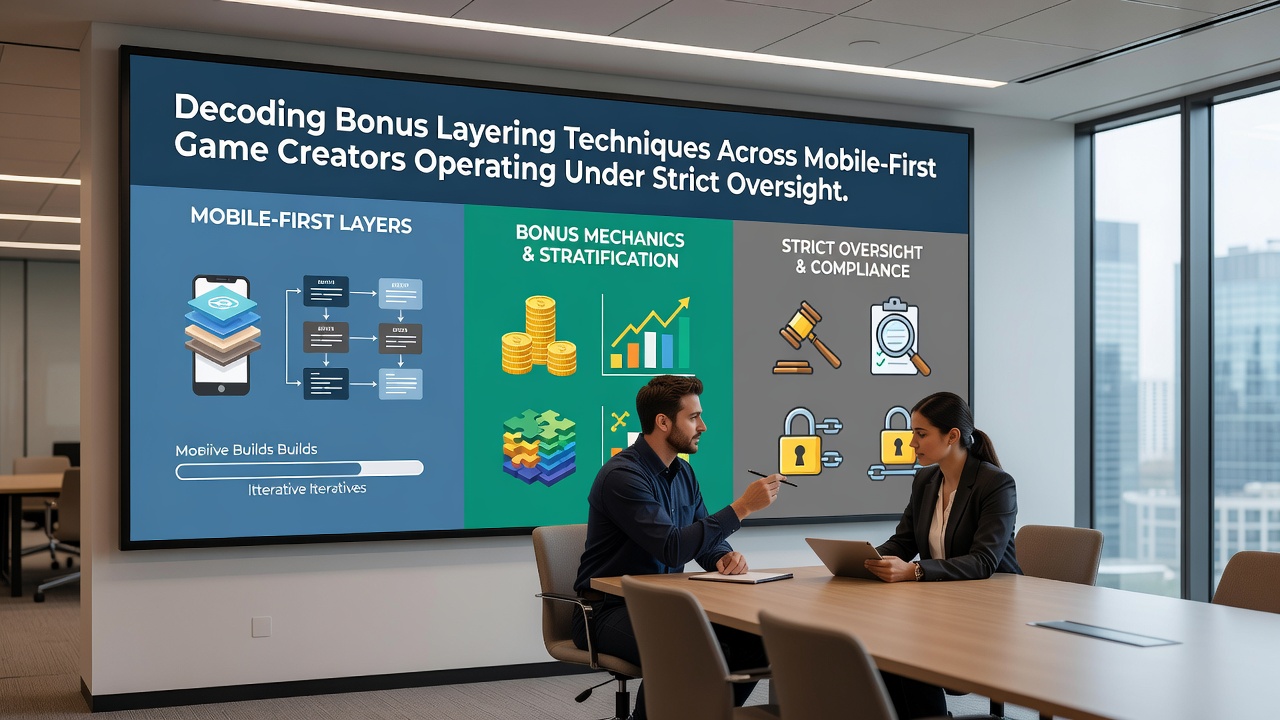
Updates scheduled around June 2026 include expanded requirements for real-time reporting of layered bonus performance metrics, which several mobile studios have already begun integrating into their backend systems. These changes align with broader efforts to standardize cross-border standards while preserving room for innovation in feature design.
Practical Techniques Observed in Production
One common method involves chaining a base multiplier to a secondary free spin round that itself feeds points into a progressive element, all governed by probability tables reviewed during certification. Another approach uses conditional triggers where player choices during a bonus round determine the depth of subsequent layers, adding strategic elements without shifting the core randomness of outcomes. Studios document these flows extensively to demonstrate adherence to rules that prohibit hidden mechanics.
Take examples from several providers who have published technical papers detailing how their systems separate visible player actions from underlying calculations. Such transparency helps satisfy demands from oversight organizations that emphasize verifiable fairness across all combined features.
Trends Emerging in Regulated Markets
Analysts tracking developments through mid-2026 report a shift toward modular layering systems that allow quick adjustments when new compliance guidelines take effect. These modular designs enable rapid updates to individual bonus components while keeping the overall structure intact, reducing downtime during certification reviews. Mobile-first teams increasingly collaborate with independent testing labs to simulate layered scenarios under simulated regulatory stress tests.
Figures reveal that markets outside traditional UK-focused operations continue to see growth in these sophisticated yet controlled implementations, driven by demand for engaging experiences that meet evolving player protection criteria.
Conclusion
Bonus layering continues to evolve as mobile studios balance creative reward structures with obligations imposed by diverse regulatory environments. Through careful design and ongoing verification processes, these techniques support sustained player interest while meeting established standards for fairness and disclosure across global markets.