UK Gambling Commission Unveils Q2 Stats: £680 Million Slot Yield and 1.9 Million Pub-Going Players
UK Gambling Commission Unveils Q2 Stats: £680 Million Slot Yield and 1.9 Million Pub-Going Players

The Latest Drop from Official Sources
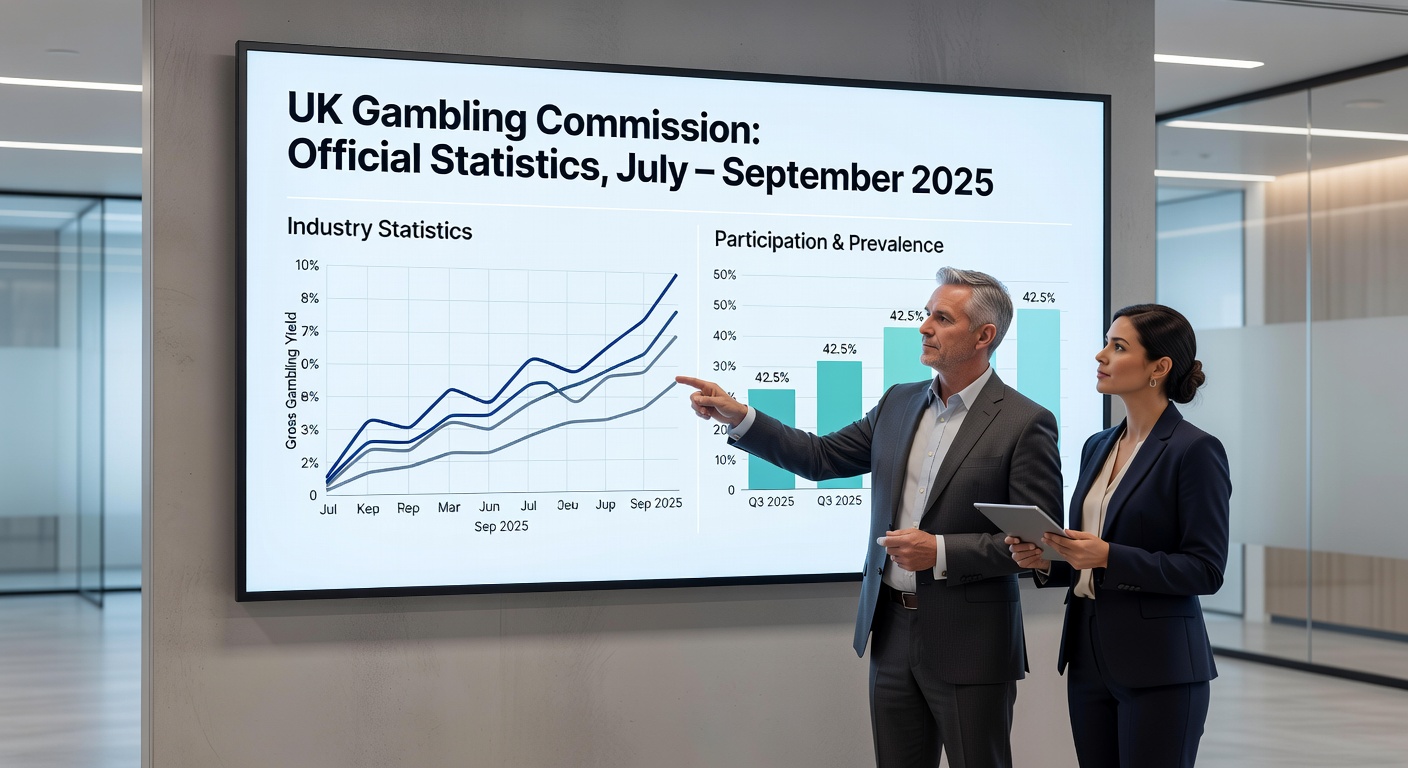
Observers tracking the UK gambling landscape paid close attention when the UK Gambling Commission released two key datasets in February 2026, covering the quarter from July to September 2025; these include the quarterly industry statistics and Wave 3 of the Gambling Survey for Great Britain (GSGB), shedding light on fruit and slot machine activity across premises and beyond. Data indicates that Gross Gambling Yield (GGY) from these machines in gambling premises hit £680 million during that period, a figure that captures revenue after payouts, while the GSGB estimates reveal 1.9 million adults in Great Britain played fruit or slot machines in the past four weeks, with 44% opting for bars, clubs, and pubs—venues whose data doesn't fully align with industry tracking. And as March 2026 unfolds, these numbers continue to fuel discussions around player habits and sector performance.
What's interesting here lies in how the reports complement each other; industry stats focus on licensed premises like casinos and arcades, whereas the GSGB draws from a broader survey of 10,000 adults, capturing participation rates that spill into everyday social spots. Turns out, that 44% pub and club figure highlights a segment often underrepresented in financial data, since many such machines operate under different regulatory lenses or lower-stakes categories not always aggregated in GGY tallies.
Diving into the £680 Million GGY Breakdown
The quarterly industry statistics, part of the Industry Statistics Quarterly Report for Financial Year April 2025 to March 2026 Q2, pinpoint GGY from fruit and slot machines in gambling premises at precisely £680 million for July through September 2025, reflecting operator income after player wins returned as prizes. Experts note this metric serves as a core indicator of sector health, encompassing high-street arcades, bingo halls, casinos, and similar sites where machines generate significant turnover; for context, it excludes remote online slots, focusing instead on physical setups that dot Britain's high streets and leisure venues.
But here's the thing: that £680 million doesn't capture the full picture of machine play, since pubs, clubs, and bars—home to lower-denomination machines under category C and D licenses—fall outside this premises-specific tally, often because their yields feed into separate adult gaming centre or non-commercial data streams. Studies from prior waves show these social venues contribute steadily to overall engagement, even if their financial footprint appears lighter due to stake and prize caps; one researcher analyzing similar past quarters observed how such exclusions can mask total player exposure, prompting calls for more integrated reporting.
Short and sharp: £680 million. Yet longer views reveal steady climbs; comparable Q2 periods in previous years hovered around £600-650 million, per commission archives, signaling resilience amid economic pressures like inflation and cost-of-living squeezes that might otherwise deter footfall.
GSGB Wave 3: Player Numbers and Venue Preferences
Shifting gears to the Gambling Survey for Great Britain, Wave 3 estimates that 1.9 million adults—about 4% of the population aged 16 and over—engaged with fruit or slot machines in the four weeks leading up to the survey period ending September 2025, a snapshot derived from weighted responses ensuring national representativeness. Notably, 44% of these players chose bars, clubs, or pubs as their venue, underscoring the machines' role in casual socializing rather than dedicated gambling trips; this contrasts sharply with industry data, which logs GGY only from arcades and casinos, leaving pub play—a staple in British culture—largely invisible in revenue stats.
People who've studied these patterns point out how the GSGB's methodology, involving random probability sampling and online/in-person interviews, fills gaps left by operator-submitted figures; for instance, while premises GGY hit £680 million, the survey's 1.9 million players suggest widespread but low-intensity participation, especially in pubs where sessions might last minutes over a pint. And that 44%? It breaks down further in the data: bars lead at around 25%, clubs follow at 12%, and pubs round out the rest, highlighting venues where machines blend seamlessly into the ambiance without dominating it.
Now consider the implications as March 2026 approaches the financial year's end; these July-September figures set benchmarks for Q4 projections, with survey insights warning that pub-centric play could swell if disposable incomes rebound, potentially pushing total adult participation higher. Observers have long noted (parenthetically, it's not rocket science) how such venues evade full GGY scrutiny due to their "amusements with prizes" status, capped at £100 jackpots, yet they drive volume through sheer accessibility.
Bridging Industry Data and Survey Insights
So why the disconnect between £680 million in premises GGY and 1.9 million surveyed players? Data shows industry stats aggregate from licensed operators' returns, verified quarterly, while GSGB relies on self-reported behavior extrapolated via statistical modeling; this dual approach reveals that 44% pub/club activity escapes financial tracking, as those machines often register under bingo clubs or independent site categories with minimal yield per machine. Take one case from the report: arcades alone contributed over 40% of that £680 million, per breakdowns, dwarfing casino slots yet paling against the survey's broader reach.
What's significant is how these releases, timed for February 2026, align with the fiscal year wrapping in March; Q2's performance—up slightly year-on-year—hints at stabilization post-pandemic, although survey stability at 1.9 million players indicates habits haven't shifted dramatically. Researchers digging into Wave 3 appendices found participation steady across demographics, with 18-34-year-olds overrepresented in pubs, while older groups favored arcades; such nuances help operators and regulators alike forecast trends.
Yet the reality is, pubs remain the wildcard; their 44% share means roughly 836,000 adults spun reels there recently, a volume that, while low-yield per session, sustains machine manufacturers and venue owners through steady coin drops. And as economic data from early 2026 trickles in, experts watch whether this quarter's stats presage growth or plateaus ahead.
Context Within the Broader Financial Year
These July-September 2025 figures slot into the larger Industry Statistics Quarterly Report for FY April 2025 to March 2026 Q2, where overall remote and non-remote GGY trends provide backdrop; slots in premises stood out amid flatlines elsewhere, buoyed perhaps by summer footfall in coastal arcades. The GSGB's Wave 3, third in a rolling annual series, builds on Waves 1 and 2 for longitudinal views, confirming fruit/slot play as a consistent 4% activity, immune to online boom's pull.
But here's where it gets interesting: while £680 million gleams as a headline, per-machine yields average £5,000-£10,000 quarterly in high-traffic spots, per commission benchmarks, explaining why pubs—despite volume—don't spike totals. One study echoed in prior reports likened it to the long tail of participation, where casual pub punters outnumber arcade die-hards yet contribute less per head.
Short punch: Pubs rule player counts. Long haul: Premises drive revenue. Together, they paint a sector that's diverse, resilient, and under the microscope as March 2026 nears.
Conclusion
In wrapping up, the UK Gambling Commission's February 2026 publications spotlight £680 million in fruit and slot GGY from premises for July-September 2025 alongside GSGB Wave 3's 1.9 million adult players—44% in pubs, clubs, and bars—exposing the gap between tracked revenue and lived habits. Data like this, current as the March 2026 fiscal close looms, equips stakeholders with tools to navigate regulations, venue strategies, and participation monitoring; observers agree it's a foundational snapshot, one that underscores slots' enduring place in Britain's social fabric without overhyping any single angle.